

John Lennon’s trust planning and the real lesson behind a potential four-million-dollar insurance tax.
John Lennon was more than a legendary musician. His success created a substantial estate involving music royalties, property, financial assets, and family inheritance. When he died in December 1980, the arrangements he had made for his estate became an important example of how wills and trusts can work together.
Unlike the familiar celebrity story of someone leaving no meaningful estate plan, Lennon had taken steps to organize his affairs. His November 1979 will included provisions for his wife, Yoko Ono, and directed the remaining estate into a separate trust arrangement after other provisions were addressed.
However, there is an important distinction between having a coordinated estate plan and proving that an estate paid no taxes, legal expenses, or administration costs. The available historical reporting does not establish that John Lennon’s entire fortune passed to his family without any financial obligations.
The more useful lesson is that estate planning involves much more than signing a will or creating a trust. Asset ownership, beneficiary arrangements, insurance policies, tax rules, and the needs of family members all need to work together.
For families who want to protect what they have built, understanding these connections can make a meaningful difference.
What John Lennon’s Will Reveals About Estate Planning
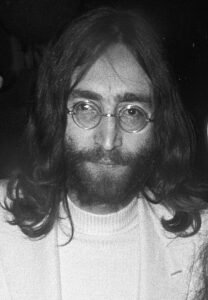
John Lennon’s will, dated November 12, 1979, provides an example of how different estate planning arrangements can be coordinated.
The document, reproduced by The Beatles Bible, included provisions for Yoko Ono and directed the remaining estate into a separate trust after other instructions were addressed. It also included provisions dealing with administration expenses and death taxes. [1]
This is significant because a will does not have to operate as a standalone document. It can work alongside trusts and other arrangements to provide instructions for how assets should be handled.
A will generally identifies how property passing through the probate estate should be distributed. It can also name an executor to manage the estate administration process and address other important matters.
A trust, on the other hand, can establish separate instructions for managing and distributing assets held within it. Depending on its structure, a trust may provide a framework for managing property during incapacity and distributing an inheritance over time.
The important point is that the documents need to complement each other.
Creating a will without considering the ownership of financial accounts, insurance policies, and other assets may leave important questions unanswered. Similarly, establishing a trust without properly funding it may prevent the intended assets from receiving the expected benefits.
Lennon’s arrangements demonstrate why estate planning should be viewed as a coordinated process rather than a single document.
Understanding the Value of John Lennon’s Estate
Historical reports about John Lennon’s wealth sometimes use very different figures. This makes it important to understand what each estimate actually represents.
A UPI report published on February 27, 1981, identified more than $5.5 million in assets in England and Wales. It also reported approximately $30 million in U.S. estate assets and mentioned a much higher estimate of worldwide holdings. [2]
These figures represent different measures and should not be treated as interchangeable.
The reported values do not establish that Lennon had a precisely valued $100 million estate that passed to his family without taxes or expenses. Nor do they establish the final tax liability of his complete estate.
This distinction matters when discussing celebrity estate planning. A large reported fortune does not automatically tell us how much tax was due, how assets were transferred, what deductions applied, or what administrative expenses were incurred.
For an ordinary family, the same principle applies. The total value of everything someone owns is not necessarily the same as the value of their taxable estate.
Ownership, beneficiary designations, deductions, prior taxable gifts, applicable exclusions, and other legal factors can affect the final result.
The Life Insurance Example Worth Understanding
One of the most useful estate planning lessons involves life insurance and the way policy ownership can affect federal estate-tax treatment.
Life insurance can provide financial support to loved ones after someone dies. However, the policy’s ownership and structure may also matter when determining whether the proceeds are included in the insured person’s taxable estate.
Consider a hypothetical example.
Imagine a U.S. citizen who has already used the available federal estate-tax exclusion through other assets or taxable gifts. Assume that the person also owns a $10 million life insurance policy and that the full death benefit would be included in their taxable estate.
For this simplified illustration, assume there are no offsetting deductions and that the additional taxable amount falls within the 40% federal estate-tax marginal rate.
The potential calculation would look like this:
| Description | Amount |
| Life Insurance Death Benefit | $10,000,000 |
| Assumed Marginal Estate-Tax Rate | 40% |
| Potential Additional Estate Tax | $4,000,000 |
Illustrative calculation only. This is not John Lennon’s actual tax bill or a prediction of any individual’s tax liability.
The calculation demonstrates why policy ownership can matter. If the insurance proceeds are included in an already taxable estate, they may increase the amount subject to estate tax.
However, the example assumes the person has already exhausted the available exclusion. It should not be interpreted as meaning that every $10 million life insurance policy automatically creates a $4 million tax bill.
How an Irrevocable Life Insurance Trust May Help
An irrevocable life insurance trust, commonly called an ILIT, is a specialized trust arrangement that may be used as part of estate-tax planning.
When properly structured and administered, an ILIT can own a life insurance policy and help keep qualifying proceeds outside the insured person’s taxable estate.
Using the simplified example above, if the policy is properly owned by an ILIT and the proceeds are excluded from the insured person’s taxable estate, the additional federal estate tax attributable to those proceeds could potentially be zero.
The potential difference in the hypothetical example would therefore be $4 million.
However, this result depends on meeting the applicable legal and tax requirements. It is not automatic.
For example, simply naming a trust as the beneficiary of a life insurance policy does not necessarily remove the proceeds from the insured person’s taxable estate.
Policy ownership, retained rights, premium payments, transfers, and the timing of those transfers can all matter.
If someone transfers an existing life insurance policy into an irrevocable trust and dies within three years of the transfer, the proceeds may be included in the taxable estate under applicable federal rules. [3]
The trust also needs to be properly administered. Premium funding and gift-tax considerations may require careful planning.
This is why irrevocable trust planning should be considered with qualified legal and tax guidance rather than treated as a simple document purchase.
Revocable Trust vs. Irrevocable Life Insurance Trust
Not every trust provides the same benefits. Understanding the difference between a revocable living trust and an irrevocable life insurance trust is particularly important.
A revocable living trust generally allows the person who creates it to retain control and make changes while they have the required legal capacity, subject to its terms and applicable law.
It can help organize assets, provide instructions for management during incapacity, and allow properly funded trust assets to pass outside probate.
An irrevocable life insurance trust serves a different purpose. It is designed around specific ownership and administration requirements that may help exclude qualifying insurance proceeds from the insured person’s taxable estate.
An ordinary revocable living trust does not automatically provide the same estate-tax treatment as a properly structured ILIT.
| Feature | Revocable Living Trust | Irrevocable Life Insurance Trust |
| Main purpose | Asset management and probate planning | Specialized life insurance and estate-tax planning |
| Flexibility | Generally more flexible | Generally more restrictive |
| Control | Creator generally retains significant control | Independent trust administration is important |
| Insurance ownership | Does not automatically exclude proceeds from the taxable estate | May help exclude qualifying proceeds if requirements are met |
| Changes | Generally amendable or revocable | Changes may be limited by the trust terms |
A revocable living trust may be appropriate for certain asset-management and probate-planning goals, while an irrevocable trust may be considered for different purposes.
The right arrangement depends on the individual’s financial position, family needs, insurance ownership, and applicable law. The two structures should not be treated as interchangeable. [4]
The 2026 Federal Estate-Tax Exclusion: Why It Matters
Another important part of life insurance and estate-tax planning is understanding the federal estate-tax exclusion.
For individuals dying in 2026, the federal basic estate-tax exclusion amount is $15 million per individual, subject to applicable rules and adjustments for prior taxable gifts. [3]
This means a $10 million life insurance policy does not automatically create federal estate tax.
For example, someone whose total taxable estate is below the applicable exclusion may not owe federal estate tax simply because they own a policy with a $10 million death benefit.
However, if the person’s available exclusion has already been used, the treatment of additional assets can become much more significant.
Marital deductions, charitable deductions, prior taxable gifts, ownership arrangements, and other circumstances may also affect the calculation.
It is therefore important to evaluate the complete estate rather than looking at an insurance policy in isolation.
The IRS explains that the federal estate tax is calculated using the taxable estate and the applicable credit and exclusion rules. Individuals should review current IRS guidance and seek qualified tax advice before making decisions. [3]
Life Insurance Income Tax and Estate Tax Are Different
There is another common misunderstanding worth addressing: life insurance proceeds are generally treated differently for federal income-tax purposes and federal estate-tax purposes.
In many situations, a beneficiary receives life insurance death benefits without including them in federal gross income.
However, that does not automatically mean the proceeds are excluded from the insured person’s taxable estate.
The two taxes involve different rules.
- Income tax: Generally, life insurance death benefits paid to a beneficiary are not included in federal gross income, subject to exceptions.
- Estate tax: Insurance proceeds may be included in the insured person’s gross estate depending on policy ownership and applicable rules.
The IRS explains the general income-tax treatment of life insurance proceeds, while its estate-tax instructions address circumstances in which insurance proceeds may be included in the gross estate. [3] , [5]
Understanding this distinction can help families avoid making assumptions about how a life insurance policy will affect their overall estate plan.
What John Lennon, James Gandolfini, and Marilyn Monroe Teach Us
Looking at the estate planning stories of these three well-known personalities reveals an important common theme.
John Lennon had a will that coordinated with a separate trust arrangement.
James Gandolfini reportedly had trust planning involving a life insurance policy owned by a trust.
Marilyn Monroe signed a will that included specific gifts and trust provisions for family support.
Their circumstances were different, but each story demonstrates why it is important to look beyond the simple question of whether someone had a will or a trust.
The more useful questions are:
- Who owns the assets?
- Who receives the insurance proceeds?
- Who manages the inheritance?
- Are beneficiary designations consistent with the estate plan?
- What happens if the person responsible for managing assets becomes incapacitated?
- Are the documents structured to meet the family’s actual goals?
A trust is not automatically better than a will, and an irrevocable trust is not appropriate for every family.
The objective should be to choose arrangements based on the assets involved, the people who need protection, and the legal and tax requirements that apply.
Choose the Estate Plan Before Choosing the Document
John Lennon’s estate demonstrates that thoughtful planning involves more than creating a document and putting it away.
A will can communicate your wishes. A living trust may help organize assets and provide instructions for their management. Specialized irrevocable trusts may serve additional purposes when their legal and tax requirements are satisfied.
Life insurance also needs to fit into the overall plan, particularly when policy ownership and estate-tax considerations are involved.
Start by reviewing what you own, who you want to protect, and who should manage important responsibilities if you become unable to act.
Check whether your will is current, whether your assets are titled correctly, and whether your insurance policies and beneficiary designations reflect your intentions.
At 855 Get A Will, you can explore estate planning options involving wills, trusts, and other planning documents. Visit 855GETAWILL.COM to discuss whether your family may need probate planning, trust planning, or other arrangements.
You do not need a celebrity fortune to deserve a thoughtful estate plan. What matters is making sure the arrangements you leave behind reflect your wishes and provide clear instructions for the people who matter most.
The goal is not simply to leave wealth behind. It is to leave a plan your family can understand and use.
Sources and References
[1] The Beatles Bible – John Lennon Signs His Last Will and Testament (November 12, 1979)
Historical reporting and reproduction of Lennon’s will, including provisions involving Yoko Ono, the separate trust arrangement, administration expenses, and death taxes.
https://www.beatlesbible.com/1979/11/12/john-lennon-signs-last-will-and-testament/
[2] United Press International (UPI) – John Lennon Left More Than $5.5 Million in Assets (February 27, 1981)
Contemporary reporting on Lennon’s reported U.S. estate assets and assets in England and Wales.
[3] Internal Revenue Service – Instructions for Form 706
Federal estate-tax rules, including the 2026 basic exclusion amount, life insurance inclusion, and estate-tax calculations.
https://www.irs.gov/instructions/i706
[4] The Florida Bar – The Revocable Trust in Florida
Consumer guidance on revocable trusts, funding, probate planning, incapacity planning, and trust administration.
https://www.floridabar.org/public/consumer/pamphlet028/
[5] Internal Revenue Service – Life Insurance & Disability Insurance Proceeds
Explains the general federal income-tax treatment of life insurance proceeds.
Photo Credit
John Lennon • Photo by Joost Evers / Anefo / Nationaal Archief • March 31, 1969 • CC0 1.0.
Original image: https://commons.wikimedia.org/wiki/File:John_Lennon_1969_(cropped).jpg
License: https://creativecommons.org/publicdomain/zero/1.0/
Legal Disclaimer
This article is for general educational and informational purposes only and is not legal, tax, or financial advice. Reading this article or contacting 855GETAWILL.COM does not create an attorney-client relationship. Consult an attorney licensed in the relevant state and a qualified tax adviser about your circumstances. Laws and outcomes vary, and no tax savings or result is guaranteed. The $4 million insurance-tax example is hypothetical and does not represent John Lennon’s actual tax liability. Celebrity references do not imply endorsement.

